Summer Lawn Care Tips: Watering, Heat Stress, and Brown Spots
August 26, 2026
Call Or Text

Summer is the hardest season on a Hudson Valley lawn. Our cool-season grasses, the Kentucky bluegrass, fescue, and ryegrass common across Poughkeepsie yards, actually prefer the mild weather of spring and fall, so the heat and dry spells of July and August put them under real stress. The good news is that summer lawn care is less about pushing growth and more about protecting what you have. Water and mow the right way, and your lawn coasts through the heat and bounces back green in fall.
At Blue Collar Landscaping, we care for lawns across Poughkeepsie and the Hudson Valley, led by owner Shane Brandemarte and a crew homeowners trust for reliable, neat work. This guide covers what actually works on Northeast cool-season lawns in summer, including the mistakes that do the most damage.
In This Guide
- Why Summer Is Hard on NY Lawns: Cool-season grass in the heat.
- How to Water in Summer: Timing and amount.
- Mowing in the Heat: Height and habits.
- Heat Stress and Brown Spots: Dormant vs. dead.
- What to Avoid in Summer: Common mistakes.
- Other Summer Lawn Problems: Weeds, grubs, and traffic.
- A Simple Summer Routine: Putting it together.
- Frequently Asked Questions: Quick answers.
Why Summer Is Hard on NY Lawns
Understanding your grass is the key to caring for it, and here in the Hudson Valley our lawns are cool-season grasses that behave very differently in heat than the warm-season grasses of the South. This one fact drives every summer decision.
Cool-season grasses do their real growing in the cooler, moist conditions of spring and fall, building roots and energy when the weather suits them. When summer heat and dry spells arrive, they shift into survival mode rather than growth mode. That is why a lawn that raced ahead in May slows to a crawl in July, and why the goal in summer is to protect and maintain the lawn rather than force it to grow. Fighting that natural rhythm, by fertilizing hard or cutting low to make it look lush, tends to backfire. Working with it, by watering and mowing to reduce stress, is what carries the lawn through to its fall comeback.
It also helps to reset expectations for the season. A cool-season lawn is not supposed to look its absolute greenest and thickest in the heat of August the way a warm-season southern lawn might, so a slightly slower, less vivid lawn in midsummer is normal and healthy, not a failure on your part. The lawns that struggle most are usually the ones pushed hardest with mowing and feeding in July. Judging your lawn by how well it is coasting through the heat, rather than how lush it looks compared to spring, keeps you from overcorrecting and doing harm.
How to Water in Summer
Watering is the most important summer task and the one most homeowners get wrong, so it is worth getting right. The principle is simple: water deeply and less often, not lightly every day.
Timing and Amount
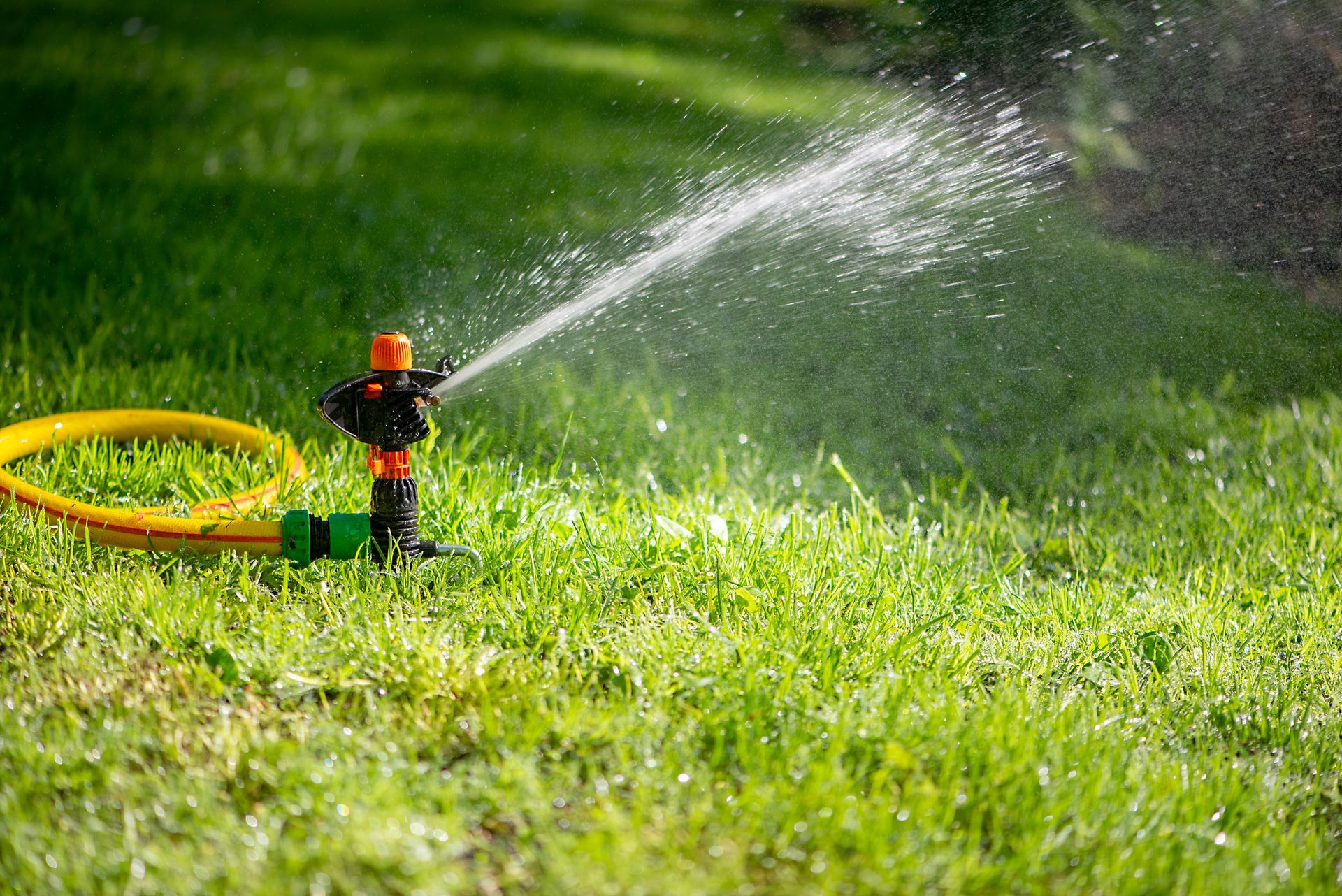
Water early in the morning, ideally before about 10 a.m., when cooler temperatures and calmer air mean less is lost to evaporation and the blades dry during the day. Aim for roughly one to one and a half inches of water per week, including rainfall, delivered in two or three deeper soakings rather than a daily sprinkle. Deep, infrequent watering pushes roots to grow down into the soil, which makes the lawn far more resilient in heat, while daily light watering keeps roots shallow and vulnerable.
Why Evening Watering Causes Problems
Watering in the evening leaves the grass wet through the night, and that warm, damp, still condition is exactly what lawn fungus loves. In our humid Hudson Valley summers, that is a fast track to disease like brown patch. If mornings are impossible, early evening is a distant second choice, but morning is the clear winner for a healthy lawn.
Mowing in the Heat
How you mow in summer matters as much as how you water, and a couple of small changes protect the lawn through the worst of the heat. The headline rule is to mow high.
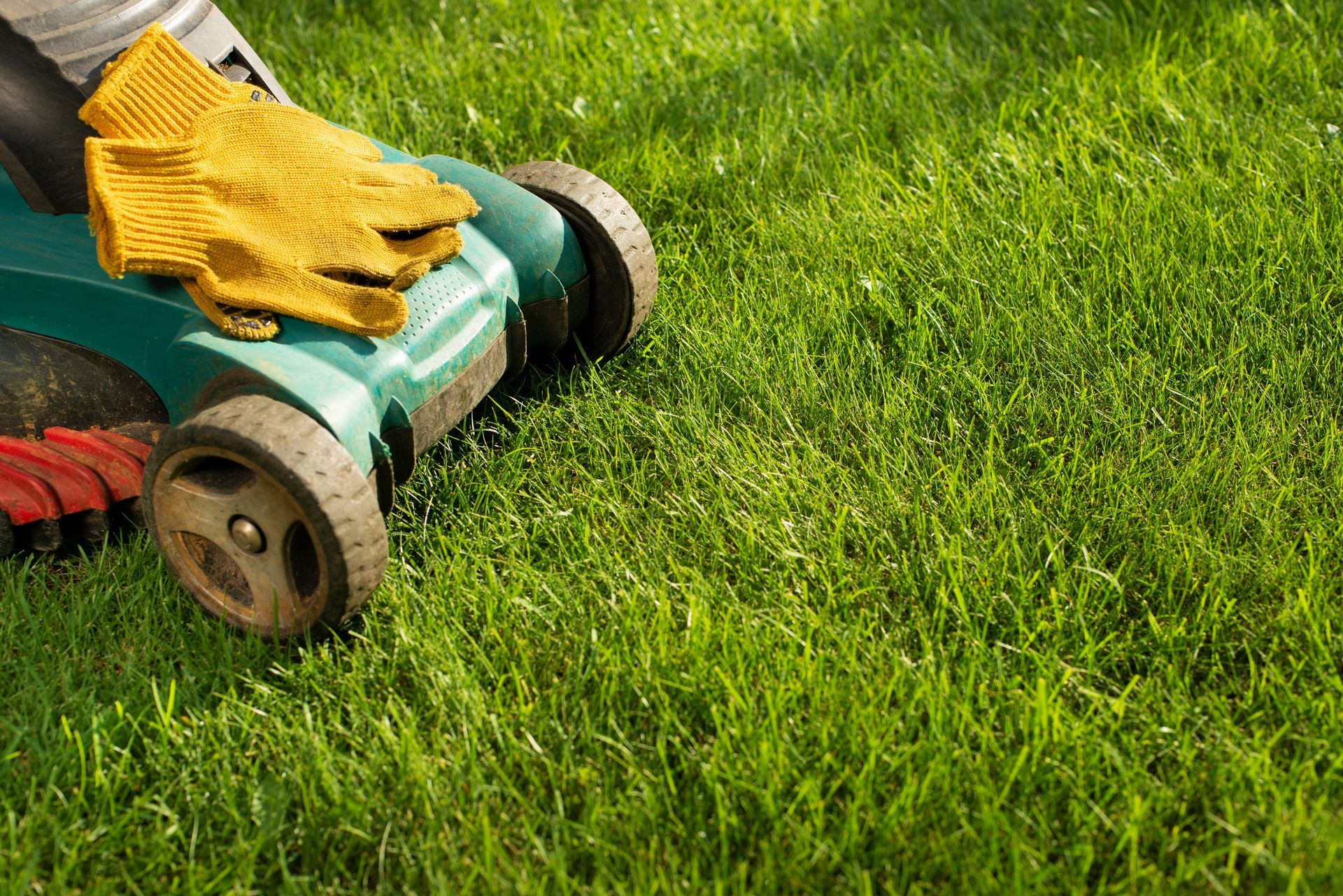
Raise your mower deck and keep cool-season grass around three to four inches tall in summer. Taller blades shade the soil, keep the roots cooler, hold moisture longer, and crowd out weeds, all of which reduce heat stress. Follow the one-third rule and never remove more than a third of the blade height in a single mow, since scalping a stressed summer lawn is one of the quickest ways to damage it. Keep your mower blade sharp, because a dull blade tears the grass and leaves ragged tips that brown and invite disease. And leave the clippings on the lawn, where they break down and return moisture and nutrients to the soil rather than adding to your workload.
Heat Stress and Brown Spots
Brown patches in summer worry a lot of homeowners, but they are usually a natural response rather than a death sentence, and knowing the difference tells you how to react. Most of the time, the lawn is protecting itself.
Dormant, Not Dead
When cool-season grass gets hot and dry, it often goes dormant, turning brown and pausing growth to conserve energy. This is a survival mechanism, and the lawn typically greens back up on its own once cooler, wetter weather returns in fall. A dormant lawn is not dead, and it does not need to be dug up or reseeded in a panic. Keeping it lightly watered through a long dry spell helps it hold on until recovery.
When a Brown Spot Is Something Else
Not every brown patch is simple dormancy, though. Distinct patches or rings, spots that appear after humid nights, or areas that look slimy or matted can signal fungal disease rather than heat. Damage from pets, spilled fertilizer, or grubs also shows up as brown areas with their own patterns. If brown spots spread quickly, follow an unusual shape, or do not recover as expected, it is worth having a professional take a look to pin down the cause before you treat the wrong problem.
What to Avoid in Summer
Some of the most common summer lawn mistakes come from good intentions, so knowing what not to do protects all the good work you are putting in. These are the habits that hurt a cool-season lawn in the heat.
- Do not fertilize a stressed or dormant lawn, since pushing growth in peak heat stresses the grass further and can burn it.
- Do not mow low, because short grass exposes soil, dries out fast, and stresses the roots.
- Do not water lightly every day, which encourages shallow roots and invites disease.
- Do not water in the evening when avoidable, as overnight moisture feeds fungal problems.
- Do not overseed in the heat, since summer is the wrong time; fall is the ideal window for seeding cool-season grass.
The through-line is that summer is a season to protect and maintain, not to push, and most mistakes come from treating a stressed lawn as if it were in its spring growth phase.
Other Summer Lawn Problems
Heat and water get most of the attention, but a few other issues flare up on Hudson Valley lawns in summer, and knowing them helps you respond correctly instead of guessing. Each has its own signs and its own fix.
Weeds like crabgrass thrive in the heat and pounce on any thin or bare spots, which is one more reason a dense, properly mowed lawn is your best defense, since thick grass simply leaves them no room. Grubs, the larvae of beetles, feed on grass roots in mid to late summer and can create irregular brown patches that peel up easily like loose carpet, a distinct sign worth checking for if brown areas do not respond to watering. Summer is also peak season for foot traffic from kids, pets, and gatherings, and heavily walked paths on a stressed lawn compact the soil and wear thin, so rotating play areas or adding a path helps. Finally, our humid nights make fungal diseases such as brown patch and dollar spot more likely, which ties back to watering in the morning rather than the evening. None of these should cause alarm, but matching the response to the actual cause is what keeps a small summer problem from lingering into fall.
A Simple Summer Routine
Pulling it all together, a healthy summer lawn comes down to a short, consistent routine rather than constant work. Keep it simple and stay steady through the heat.
Water deeply two or three mornings a week for about an inch to an inch and a half total, mow high with a sharp blade and never remove more than a third of the blade, leave the clippings, and hold off on fertilizer and seeding until fall. Watch for brown areas and treat obvious dormancy with patience rather than panic, while keeping an eye out for the patterns that suggest disease or pests. That steady, protective approach is what keeps a Hudson Valley lawn alive and healthy through summer and sets it up to rebound in the fall. If you would rather leave the mowing and upkeep to a reliable local crew, we handle summer lawn care across the area.
| Summer Task | What to Do | Why It Helps |
|---|---|---|
| Watering | 1 to 1.5 in/week, 2 to 3 deep morning soakings | Deep roots, less disease |
| Mowing | Keep grass 3 to 4 inches, sharp blade | Shades soil, cuts heat stress |
| Feeding | Hold fertilizer until fall | Avoids stressing dormant grass |
Keep Your Lawn Healthy This Summer With Blue Collar
Summer lawn care is about protecting your lawn through the heat so it comes back strong in fall, and the right watering and mowing habits make all the difference. For dependable lawn care across Poughkeepsie and the Hudson Valley, Blue Collar Landscaping is here to help.
Call Blue Collar Landscaping at (845) 394-9409 or
contact us online for a free estimate. Serving Poughkeepsie, Wappingers Falls, Hyde Park, LaGrange, and nearby towns. Explore our
lawn mowing services.
Frequently Asked Questions
How often should I water my lawn in summer in New York?
Aim for about one to one and a half inches of water per week, including rainfall, delivered in two or three deeper soakings rather than daily. Water early in the morning before about 10 a.m. to limit evaporation and let the blades dry during the day. Deep, infrequent watering builds stronger, deeper roots that handle heat far better.
Why is my lawn turning brown in the summer?
Most often, cool-season grass turns brown because it has gone dormant to survive heat and drought, which is normal and usually reverses when cooler, wetter weather returns in fall. However, distinct patches, rings, or spots after humid nights can signal fungal disease, and pets, fertilizer spills, or grubs cause their own patterns. If it spreads oddly, have it checked.
Should I fertilize my lawn in the summer?
Generally no, not a cool-season lawn in peak summer heat. Fertilizing a stressed or dormant lawn pushes growth when the grass is trying to conserve energy, which adds stress and can burn it. The best times to fertilize cool-season grass are spring and especially fall. In summer, focus on proper watering and mowing instead.
How short should I cut my grass in summer?
Taller is better in summer. Keep cool-season grasses around three to four inches by raising your mower deck. Taller blades shade the soil, keep roots cooler, retain moisture, and resist weeds. Never remove more than a third of the blade in one mow, and keep the blade sharp, since scalping a heat-stressed lawn is one of the fastest ways to damage it.
Is it too late to fix my brown summer lawn?
Usually not. If the browning is heat dormancy, the lawn typically recovers on its own once temperatures drop and rain returns in fall, and light watering helps it hold on until then. Fall is also the ideal time to overseed and repair thin or damaged areas. If a brown area looks like disease or pests, addressing the cause is the first step to recovery.
Recent Posts