The Best Mulch for Flower Beds: Types, Costs, and When to Use Each
September 11, 2026
Call Or Text

Quick Answer: For most flower beds, finely shredded hardwood or bark mulch is the best all-around choice. It looks clean, breaks down into the soil, and works for nearly every plant. If your bed is full of acid-loving plants like azaleas, rhododendrons, or hydrangeas, pine bark or pine straw is the smarter pick. Skip rubber, landscape fabric, and stone in a densely planted flower bed. Expect to pay roughly $30 to $60 per cubic yard for quality hardwood mulch in bulk, before delivery and spreading.
At Blue Collar Exterior Improvements, we mulch flower beds across Poughkeepsie and the surrounding Dutchess County towns as part of our landscaping and garden maintenance work, so we spend a lot of the season with our hands in the beds you are reading about. This guide covers the mulch types that actually make sense for a Hudson Valley flower bed, what they cost, and when to use each.
Organic vs. Inorganic Mulch
Every mulch falls into one of two camps, and the difference matters more in a flower bed than anywhere else in your yard. Organic mulches are made from plant material and break down over time. Inorganic mulches, like stone and rubber, stay put and never decompose.
For flower beds specifically, organic wins for most homeowners. Flowers have shallow roots and are sensitive to moisture swings, and an organic mulch that decomposes feeds the soil those roots sit in. That is a real advantage over a season, not just a cosmetic one.
Why Organic Is Usually Right for Flowers
As shredded bark or hardwood breaks down, it improves the soil structure and adds nutrients right where flowers need them, which supports bigger, healthier blooms. It also holds moisture through our humid Hudson Valley summers and buffers roots against the temperature swings of a Zone 5b to 6a climate. The trade-off is that it needs topping off, usually once a year.
Where Inorganic Falls Short in a Flower Bed
Stone and gravel drain well and last for years, which makes them tempting, but in a dense flower bed they cause problems. They add nothing to the soil, they work their way down into it over time so you can never fully remove them, and they radiate summer heat onto shallow-rooted plants. Landscape fabric and black plastic are worse here: shallow-rooted perennials resent them, and they are miserable to work around once plants fill in. We reserve stone for the places it belongs, like dry borders and low-plant accents, not the middle of a planted bed.
The Best Mulch Types for Flower Beds
Not all organic mulch behaves the same, and the right one depends on what you have planted. Here are the options we actually use and recommend for flower beds, and the situations each one fits.
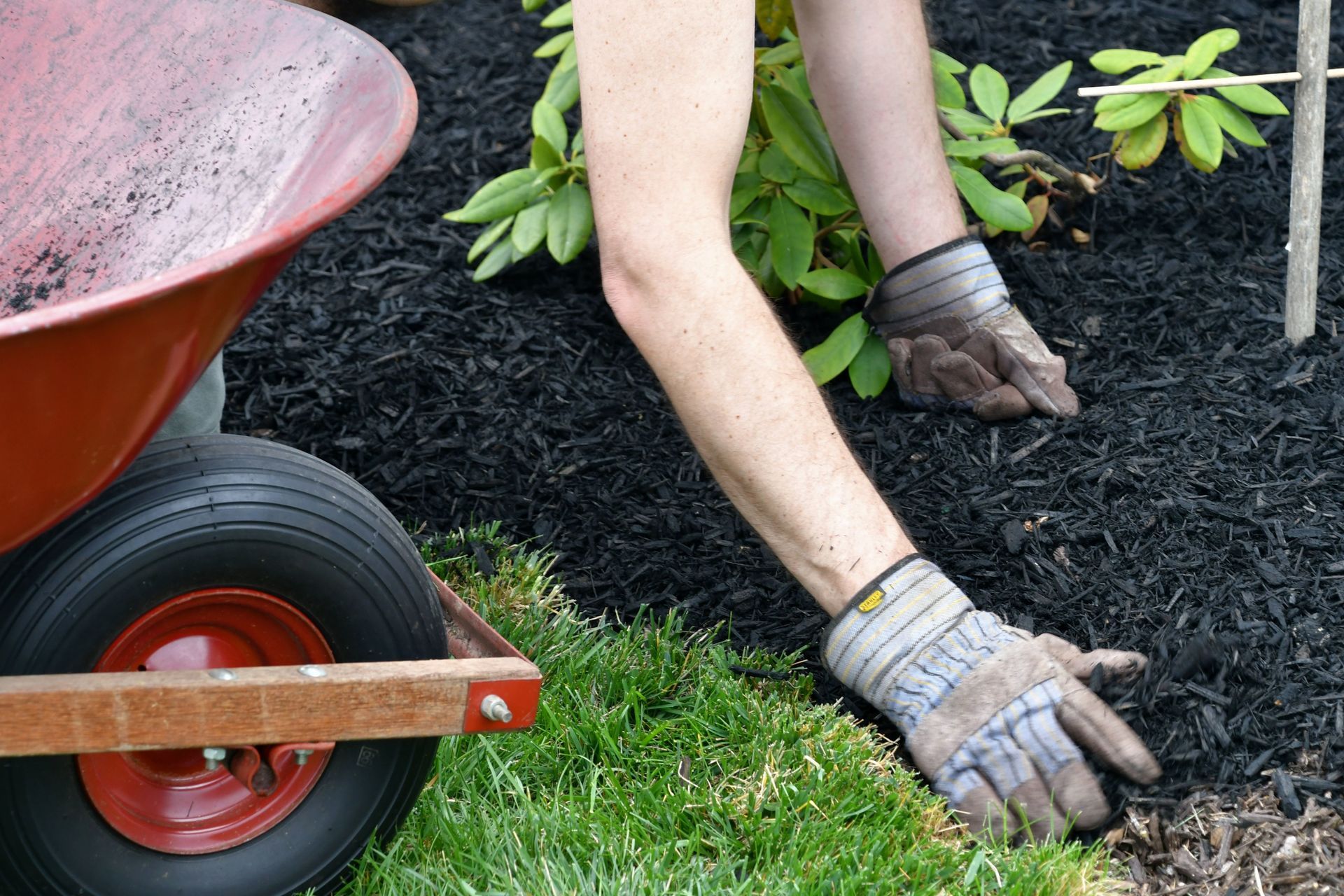
The texture matters as much as the material. Finely shredded mulch tucks neatly around delicate stems and gives that clean, finished look, while coarse chunks are hard to spread in a tight bed.
Shredded Hardwood and Bark
This is the go-to for most flower beds in our area, and for good reason. Shredded hardwood knits together so it stays put on a slope, has a fine, neutral texture that looks polished, and breaks down at a reasonable rate to feed the soil. It suits nearly every plant, which is why it is what we reach for on the majority of Dutchess County properties.
Pine Bark and Pine Straw for Acid-Lovers
The Northeast is full of acid-loving plants, and a lot of Hudson Valley beds are built around them. Azaleas, rhododendrons, hydrangeas, and blueberries all thrive in slightly acidic soil, and pine bark and pine straw gently lower pH as they break down. Pine bark also comes in nugget sizes that allow good air circulation around roots, and pine straw is light and easy to spread. If your bed is anchored by those plants, pine is the better match than hardwood.
Compost and Mushroom Mulch
When feeding the soil is the priority, compost or mushroom mulch delivers more nutrients than bark. It is excellent for nutrient-hungry annual displays. The one caution is that mushroom compost is slightly alkaline, so keep it away from the acid-loving plants above, where it works against you.
A Word on Dyed Mulch and Cedar
Two other options come up often. Cedar mulch resists insects and holds its natural color longer than plain hardwood, which makes it popular, though it breaks down slowly so it feeds the soil less. Dyed mulch is fine in a flower bed when it is quality product, but the caution worth knowing is that the cheapest dyed mulches are sometimes made from ground-up recycled wood, including old pallets or construction scrap, rather than clean bark. For a bed where the mulch touches your plants and soil, buy dyed mulch from a reputable supplier who can tell you what it is made from, not the mystery bags on a clearance pile.
What Mulch Costs
Mulch is usually sold two ways: in bulk by the cubic yard, or in bags at the garden center. For anything larger than a small bed, bulk is far more economical, and one cubic yard covers roughly 100 square feet at the recommended three-inch depth.
The ranges below are typical for our area and reflect the material only. Delivery and the labor to spread it are separate, though bulk pricing still beats bagged for any real bed.
Typical Mulch Prices
Use these as a starting point; actual pricing shifts with supplier and season.
| Mulch Type | Best For | Rough Cost per Cubic Yard |
|---|---|---|
| Shredded hardwood | Most flower beds | $30 to $50 |
| Dyed hardwood (black or brown) | A bold, long-holding color | $35 to $55 |
| Pine bark | Acid-loving plants | $35 to $60 |
| Compost or mushroom | Feeding hungry annuals | $30 to $55 |
| Stone or gravel | Dry borders, not dense beds | $50 to $120+ |
Bags vs. Bulk and What Drives the Price
Bagged mulch runs a few dollars per two-cubic-foot bag, which adds up fast, since it takes about 13 to 14 bags to equal a single cubic yard. Beyond material, your real cost depends on how many yards your beds need, whether it is delivered, and whether you spread it yourself or have a crew do it. Dyed mulches cost a little more and hold their color longer, which some homeowners prefer for the polished look; natural hardwood fades gently to gray over the season.
When to Mulch in the Hudson Valley
Timing is a real question in our climate, not an afterthought. The two mulching windows here are spring and fall, and they do different jobs.
Getting the timing right is part of why a bed looks good all season instead of just the week after it is spread.
Spring: The Main Event
Spring is the primary mulching season. Wait until the soil has warmed, then refresh beds to suppress the weeds before they get going, lock in moisture ahead of summer, and give everything a clean, finished look for the growing season. For most of our clients, a spring refresh is what keeps beds sharp, and it pairs naturally with the rest of a spring cleanup.
Fall: Protection for What Overwinters
A lighter fall application does something different: it insulates the roots of perennials against the freeze-thaw cycles that define a Hudson Valley winter. Those repeated freezes and thaws can heave shallow-rooted plants right out of the ground, and a protective mulch layer buffers the soil temperature to prevent it. If you only mulch once, make it spring; if you have tender perennials you want to protect, a fall top-off is worth it.
How to Apply It Without Hurting Your Plants
Mulch does more harm than good when it is applied wrong, and the most common mistake is piling too much of it against plants. A few simple rules keep it working for you.
The goal is a consistent layer that covers the soil, not a blanket that smothers the crowns and stems of your plants.
The Basics That Matter
Spread mulch two to three inches deep. Less than that will not suppress weeds or hold moisture; much more can keep water from reaching the roots. Keep it pulled back an inch or two from plant stems and crowns so they can breathe and stay dry, since mulch mounded against a stem traps moisture and invites rot. And do not lay fresh, un-aged wood mulch directly against plants, because as it breaks down it can pull nitrogen from the soil right where your flowers need it.
Keeping Beds Sharp
The finishing touch is the edge. A crisp, spade-cut bed line does as much for the look of a mulched bed as the mulch itself, giving that intentional, tidy border along walks and driveways. This is the part homeowners most often skip and the part that most separates a professionally maintained bed from a DIY one. Refreshing mulch and re-cutting edges each spring is the difference between beds that look designed and beds that look overgrown by July.
Get Your Flower Beds Mulched and Maintained
Whether you want a one-time refresh or a plan that keeps your beds sharp all season, Blue Collar Exterior Improvements can handle the mulching, edging, and planting for you. We are a locally owned landscaping team serving Poughkeepsie, Wappingers Falls, Fishkill, Hopewell Junction, and the surrounding Dutchess County area, with a reputation built on neat work and dozens of five-star reviews. Call or text us at (845) 394-9409
for a free estimate.
Frequently Asked Questions
What is the best mulch for flower beds?
Finely shredded hardwood or bark mulch is the best choice for most flower beds. It has a clean, neutral look, breaks down to feed the soil, and works for nearly all plants. If your bed features acid-loving plants like azaleas or hydrangeas, choose pine bark or pine straw instead, since they gently lower soil pH.
How much mulch do I need for my flower beds?
One cubic yard of mulch covers about 100 square feet at a three-inch depth. Measure the square footage of your beds and divide by 100 to estimate the yards you need. For anything beyond a small bed, buying in bulk is far cheaper than bagged mulch, which takes 13 to 14 bags to equal one cubic yard.
How often should I replace mulch?
Organic mulch should be refreshed about once a year, typically in spring, because it breaks down into the soil over the season. You usually top off the existing layer rather than remove and replace it, keeping the total depth around two to three inches.
Is black mulch bad for flowers?
No, dyed black or brown mulch is fine for flower beds when it is quality product made from clean wood. The dye is there for color and to help it hold that color longer through the season. Black creates strong contrast that makes flower colors pop, while natural brown gives a softer, more traditional look.
Should I mulch in spring or fall?
In the Hudson Valley, spring is the main mulching season, done after the soil warms to suppress weeds and retain moisture for summer. A lighter fall application is worthwhile if you have tender perennials, since it insulates roots against winter freeze-thaw cycles that can heave plants out of the ground.
Recent Posts